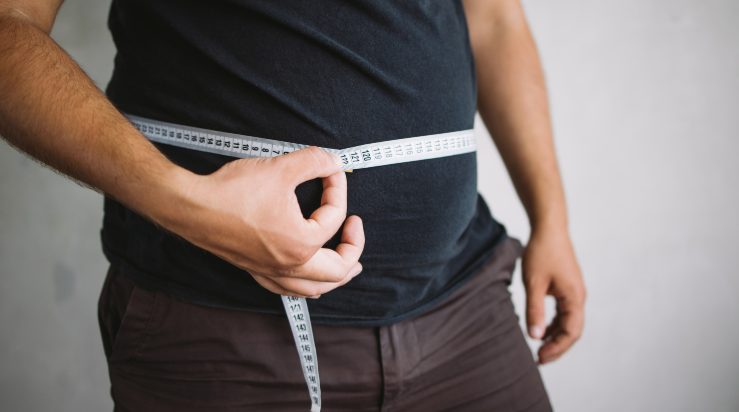
Rutgers study finds waist size may be powerful indicator of obesity-related health risks

Measuring a person’s waist may be one of the simplest ways to identify obesity-related health risks, with a new Rutgers Health study finding that waist circumference alone performed nearly as well as a more complex approach involving multiple body measurements.
The study, published in JAMA Network Open, found that combining body mass index, or BMI, with waist circumference — or using waist circumference alone — performed similarly to a recently proposed obesity definition that incorporates several measurements.
The findings suggest a simple waist measurement could provide patients and health care professionals with a practical way to identify potentially unhealthy levels of body fat and associated health risks, according to Rutgers.

“Pay attention to the need to loosen your belt or get bigger pants,” said Aayush Visaria, a faculty member of the Rutgers Health-RWJBarnabas Health Center for Climate, Health, and Healthcare and lead author of the study. “Although clothing size isn’t the same as a proper waist circumference measurement, it can be an early sign of unhealthy amounts of body fat. Measuring your waist, along with your weight, can help identify health risks earlier and provide an opportunity to reduce your risk of diabetes, heart disease, stroke and some cancers.”
Researchers evaluated data from 1,900 U.S. adults between the ages of 20 and 59 who participated in the National Health and Nutrition Examination Survey. They compared several approaches for diagnosing obesity with a highly accurate method of measuring body fat.
Researchers also examined a recently proposed obesity framework developed by a multidisciplinary group of independent experts that incorporates BMI, waist circumference, waist-to-height ratio and waist-to-hip ratio.
While that framework identified more people with excess body fat, researchers found that simpler approaches achieved similar accuracy.
A definition using either BMI or waist circumference provided a better balance between correctly identifying people with obesity and avoiding false-positive diagnoses, according to the study. Waist circumference alone performed nearly as well.
Researchers noted that hip circumference, one of the measurements required under the newly proposed framework, is rarely collected during routine clinical care. Waist circumference, however, is relatively easy to measure and is increasingly recognized in clinical guidelines.
“Our findings show that you don’t necessarily need multiple complex measurements to identify obesity-related health risks,” said Visaria, who also is an instructor in the Department of Medicine at Rutgers Robert Wood Johnson Medical School. “A waist measurement provides much of the information needed and is feasible for clinicians and patients alike.”
The study also found that BMI alone failed to identify a substantial number of people who met body-fat criteria for obesity, reinforcing concerns that BMI does not fully account for differences in body composition or fat distribution.
Researchers said the findings could help shape future obesity screening recommendations and support wider use of waist measurements in routine health care.
The study was coauthored by Soko Setoguchi of the Rutgers Center for Climate, Health, and Healthcare; Ethan Halm of Rutgers Health; and Douglas Corsi, Dylon Patel, Keerthana Kesavarapu and Jeffrey Carson of Rutgers Robert Wood Johnson Medical School.