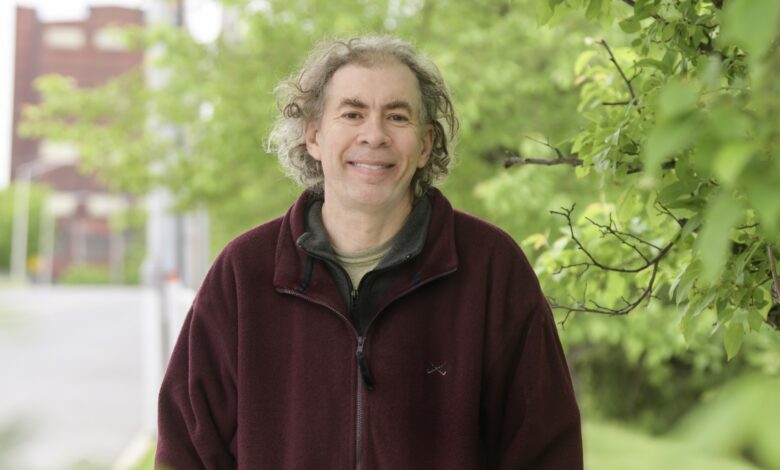
Man discovers increased cancer risk through St. Luke’s free genetic screening program

ALLENTOWN, Pa. (Lehigh County) — A 52-year-old Allentown man who maintains an active and healthy lifestyle discovered he has an increased risk of developing certain cancers after participating in a free genetic screening program offered by St. Luke’s University Health Network.
Erwin Rogers, who does not smoke or drink alcohol and regularly walks through his neighborhood, learned about the St. Luke’s DNA Answers research program through a flyer at his primary care doctor’s office.

“It was a no-brainer for me to learn if I have any health risks.”
DNA Answers is a community health research program offered by St. Luke’s in partnership with Helix, a population genomics company. The program provides genetic screening at no cost to participants as part of an effort to advance precision medicine, an approach that uses individual genetic information to help guide medical care.
“We have arrived at a historic turning point in the history of medicine – the ability to use information stored in patients’ DNA to improve the accuracy of certain treatments for the individual patient,” said Dr. Aldo Carmona, St. Luke’s senior vice president of clinical integration.
Earlier this year, Rogers visited a St. Luke’s laboratory on Lehigh Street in Allentown, where a blood sample was collected for genetic analysis.
“It was really easy to sign up and participate, and my results followed pretty quickly,” Rogers explained.
The results identified hereditary breast and ovarian cancer syndrome (HBOC) and a BRCA1 gene mutation, indicating an increased risk of prostate, male breast and pancreatic cancers.
“I was shocked and surprised to learn I have a genetic mutation that puts me at a higher risk to develop cancer than the general population,” he said.
Although Rogers said he has no family history of cancer, he is taking steps to monitor his health and reduce his risks.
Dr. Christopher N. Chapman, medical director for St. Luke’s Precision Medicine and principal investigator for the DNA Answers study, said the program aims to enroll 100,000 participants over four years.
“Our study initially aims to enroll 100,000 participants over four years. Participating individuals, like Mr. Rogers, are provided genetic screening at no cost, informing them of important health information about inherited risks for serious conditions, such as a known cause of cardiovascular disease and certain types of cancer. This knowledge allows the participant to make proactive decisions in conjunction with their health care provider to potentially delay, reduce, or even prevent these conditions from occurring later in life.”
Following his results, Rogers was connected with a certified genetic counselor from the DNA Answers team, who explained the implications of the mutation and discussed preventive measures.
While carrying a genetic mutation does not guarantee a person will develop cancer, Rogers is working with his medical providers to establish a personalized cancer screening and risk-reduction plan.
He also shared his results with his St. Luke’s primary care provider, Matthew Shultz, a physician assistant, who helped develop a plan for future screenings.
According to St. Luke’s, the DNA Answers program may also provide participants with additional health information in the future. Because genetic information is sequenced and stored, additional clinical genomic testing may be performed with a provider’s order and patient consent without requiring another blood sample.
The information could help health care providers identify medications that may be more effective for individual patients and provide additional insights into inherited health risks.
Participation in the DNA Answers research program is free, although additional clinical testing outside the research program would be billed through standard procedures.
“I’m focused on being proactive with my wellness and have more frequent preventive screenings,” Rogers says. “I would encourage anyone to participate and to take this great opportunity from St. Luke’s to learn more about your health.
“You can have all the money in the world, but if you don’t have your health, what good is it? Because health is wealth.”