
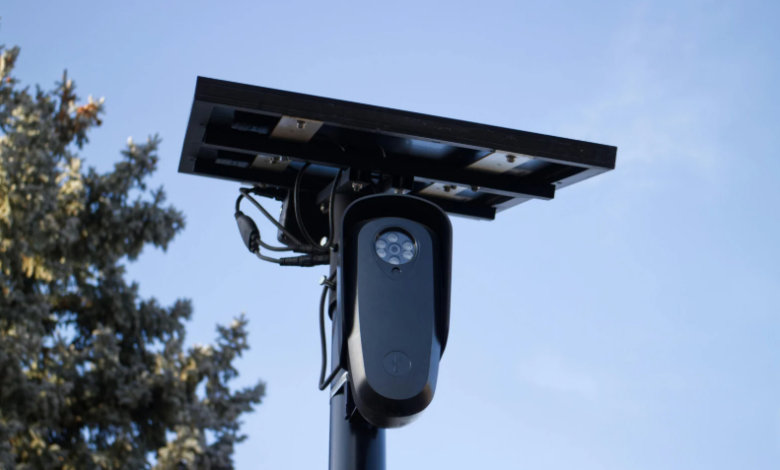
New Jersey Fraternal Order of Police calls for safeguards while supporting license plate reader technology

NEW JERSEY — The New Jersey State Fraternal Order of Police is calling for stronger safeguards and oversight of automated license plate reader technology while reaffirming its support for the systems as an important tool for law enforcement agencies across the state.
NJFOP State President James E. Ford said automated license plate readers, commonly known as ALPRs, provide significant public safety benefits but must be used responsibly, with clear policies to protect individual privacy and constitutional rights.
The organization’s position aligns with a National Fraternal Order of Police policy paper addressing automated license plate readers and emerging law enforcement technologies.

“Technology has become an essential part of modern policing, and we cannot ignore the benefits these tools provide to both law enforcement officers and the communities they serve,” said Ford. “Automated License Plate Readers help identify stolen vehicles, locate wanted individuals and missing persons, develop investigative leads, and assist in solving crimes. These are real public safety benefits that should not be overlooked.”
According to the NJFOP, the technology can help law enforcement agencies operate more efficiently at a time when departments throughout New Jersey continue to face staffing, recruitment and retention challenges. The organization described license plate readers as a resource that allows officers to make better use of limited personnel while supporting criminal investigations and public safety efforts.
However, Ford emphasized that the benefits of the technology must be balanced against concerns about privacy, data security and the potential for improper use.
“Public trust is the foundation of effective policing,” Ford continued. “When technology is misused, those responsible must be held accountable. But the misconduct of an individual should not automatically result in the elimination or unnecessary restriction of a tool that is otherwise being used lawfully and responsibly by thousands of dedicated law enforcement professionals.”
The NJFOP is advocating for comprehensive agency policies that limit access to license plate reader data to legitimate law enforcement purposes. The organization also supports standards governing how information is stored, retained, shared and deleted to protect sensitive data from unauthorized access or misuse.
Additional recommendations include access controls, audit trails, supervisory reviews and consequences for improper use. The organization also called for training to ensure officers understand legal requirements and agency procedures, along with accountability measures requiring technology vendors to maintain security standards and operate transparently.
According to the NJFOP, these safeguards should be consistently enforced and periodically reviewed as technology advances and legal requirements change.
Ford pointed to the National Crime Information Center as an example of how law enforcement agencies have addressed concerns surrounding investigative technology through policies, auditing systems and accountability measures rather than eliminating the resources entirely.
“There’s an important distinction between addressing a problem and eliminating a solution,” Ford stated. “If there are weaknesses in policies, we strengthen them. If there are concerns about data security, we address them. If someone abuses their access, we hold them accountable. What we should not do is unnecessarily take away resources that help officers do their jobs and keep our communities safe.”
The NJFOP also stressed the importance of involving law enforcement officers, community members, policymakers and technology providers in discussions about how emerging investigative tools should be regulated.
The organization said collaboration among those groups is necessary to develop policies that address privacy concerns while preserving technology that can assist officers in locating missing persons, identifying stolen vehicles and investigating crimes.
“We welcome constructive conversations about how these systems are used, how information is protected, and how accountability can be strengthened,” Ford said. “Good public policy should be developed through collaboration, an understanding of how law enforcement actually operates, and a shared commitment to public safety and individual rights.”
The NJFOP said it remains committed to working with lawmakers, law enforcement leaders and other stakeholders to develop a responsible approach to emerging technologies that balances public safety needs with constitutional protections.
“Protecting our communities and protecting individual rights are not competing responsibilities. They are equally important obligations,” Ford concluded. “We can embrace innovation without sacrificing accountability, and we can demand accountability without sacrificing the tools that help keep people safe. That is the balance we should be working toward.”


