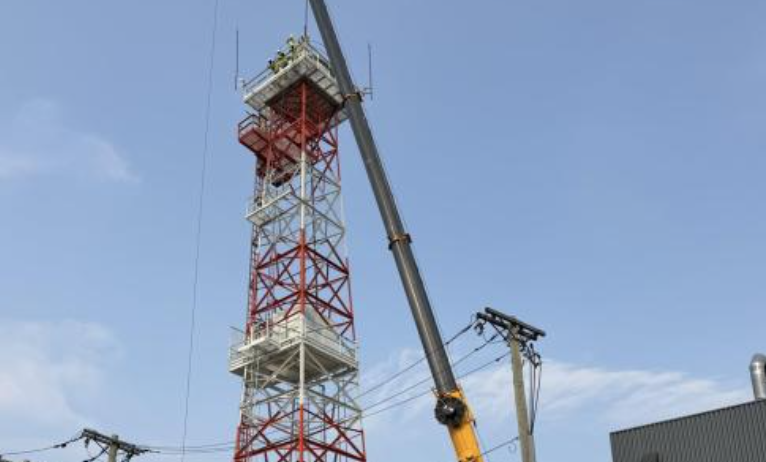
New radar unveiled at Newark Liberty International Airport as part of air traffic control upgrades

NEWARK, N.J. (Essex County) — A new surface radar system designed to help air traffic controllers track aircraft and vehicles on runways and taxiways has been installed at Newark Liberty International Airport, federal transportation officials announced Tuesday.
U.S. Transportation Secretary Sean P. Duffy and Federal Aviation Administration Administrator Bryan Bedford unveiled the Surface Movement Radar Model 4, or SMR-4, as part of a series of infrastructure and technology upgrades at the airport.
The new equipment replaces a surface radar system that was about 30 years old, according to the U.S. Department of Transportation.

The SMR-4 allows air traffic controllers to track aircraft and ground vehicles on runways and taxiways during varying weather and visibility conditions, helping controllers prevent runway incursions. Newark is the fifth airport nationwide to receive the system, transportation officials said.
“Since the start of this administration, we have been working towards building a modern system that will serve America’s skies for generations. From replacing Newark’s ancient copper wire to investing $30 million into new infrastructure and bringing new radar online, we are delivering real safety and efficiency enhancements at one of our nation’s busiest airports. We’re just getting started in our efforts to usher in the Golden Age of Travel for American passengers,” said U.S. Transportation Secretary Sean P. Duffy.
Federal officials said Newark airport is expected to receive $30 million over the next three years for additional infrastructure upgrades.
About 90% of the airport’s copper wiring has already been replaced with high-speed fiber to improve communications, according to transportation officials. The airport is also transitioning from paper flight strips to electronic flight strips.
“Newark sees well-over a thousand flights per day, and the new Surface Movement Radar will help controllers keep those flights safe at this major U.S. hub,” said FAA Administrator Bryan Bedford. “This is just the latest step in the FAA’s work to modernize our skies for the Golden Age of Travel.”
Additional improvements are expected by the end of summer 2027, including new electronic information displays intended to improve controllers’ situational awareness and new voice switches to improve communications between controllers, pilots and other air traffic facilities.
Federal officials also plan to install new long-range radar to provide controllers with updated technology for monitoring aircraft positions.
The upgrades follow a period of significant operational problems at Newark in 2025, when the airport experienced widespread delays and disruptions. Federal officials have since implemented several changes, including software updates, installation of new fiber connections and adjustments to flight volumes based on air traffic controller staffing.
Transportation officials also pointed to the early completion of runway construction as another step taken to improve operations at the airport.
The FAA said similar air traffic control modernization efforts are underway nationwide. Over the past year, the agency said 60% of copper wiring has been replaced, 363 radio sites have been converted, 96 Surface Awareness Initiative systems have been installed and 19 control towers have transitioned to electronic flight strips.
The FAA also said 151 internet protocol voice switches have been installed at air traffic control towers across the country.