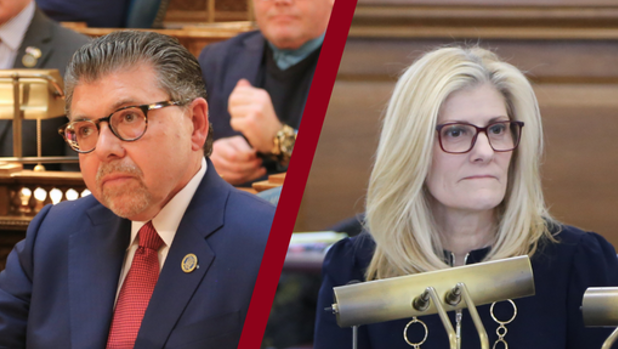
Bucco, Corrado propose election integrity bill following noncitizen voter registration issue

TRENTON, N.J. — Senate Republican Leader Anthony M. Bucco and Sen. Kristin Corrado announced plans to introduce legislation aimed at strengthening New Jersey’s election safeguards following the state’s disclosure that thousands of noncitizens were mistakenly registered to vote through the New Jersey Motor Vehicle Commission.
The proposal comes after state officials reported that at least 6,600 noncitizens were improperly registered to vote, with hundreds casting ballots as a result of what the administration has described as a software error within the Motor Vehicle Commission.
The Republican-backed legislation would:

- Eliminate automatic voter registration at the New Jersey Motor Vehicle Commission.
- Require voter identification in future elections.
- Establish regular, independent and transparent audits of New Jersey’s voter rolls.
“New Jerseyans need more than just excuses and finger pointing, they deserve action, and there are commonsense steps we can take right now,” said Sen. Bucco. “Get the Motor Vehicle Commission out of the voter registration business, implement voter identification requirements, and establish regular audits to clean up our voter rolls. These are straightforward safeguards that can be put in place immediately while we continue to uncover how this disaster happened. We can take action today to correct the obvious problems, but the Legislature has a responsibility to investigate how we got here and make sure this never happens again.”
Corrado said the proposed changes are intended to restore public confidence in the state’s election system.
“Removing the MVC from the voter registration process, requiring voter ID, and conducting regular audits of our voter rolls are the obvious safeguards we should be implementing right now,” said Sen. Corrado. “But New Jersey cannot simply fix the symptoms and move on. We need a complete accounting of what happened, who knew about it, when they knew, why warnings were ignored, and what additional reforms are necessary to ensure a breach of public trust of this magnitude never happens again.”