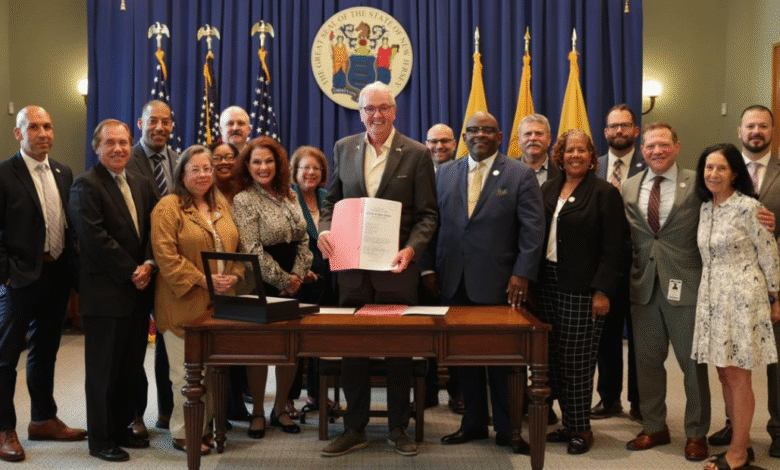
Murphy signs bills boosting worker protections, adding labor history lessons in NJ schools

TRENTON, N.J. — Gov. Phil Murphy signed two bills Wednesday that expand workplace protections for New Jersey employees and require schools to teach students about the history of the labor movement.
One measure (A1682/S1054) directs the State Board of Education to adopt standards requiring instruction on U.S. and New Jersey labor history in grades 6 through 12. Lessons will cover the history of organized labor, notable strikes, unionization drives, collective bargaining and legal workplace protections.
“Workers are the backbone of our state,” Murphy said. “Our actions today will help ensure that students understand the history of labor’s fight for fair wages and safe workplaces, while also promoting respect for our democracy by shielding employees from mandatory political or religious workplace messaging.”

The second bill (A4429/S3302) prohibits employers from forcing workers to attend mandatory meetings on political or religious matters, including anti-union “captive audience” meetings. Employers may still hold voluntary meetings, provide legally required information and conduct anti-discrimination or anti-harassment training.
Labor leaders hailed the legislation as a win for working families. AFL-CIO President Liz Shuler said New Jersey is “making it clear that workers’ voices belong at the heart of our workplaces and our classrooms.”
The state is home to more than 7,000 defense contractors and tens of thousands of union members, with organized labor long a major influence on New Jersey’s economy and politics. Supporters said the new laws both honor that legacy and safeguard future rights.
“This bill is about protecting workers’ rights and making sure every person is treated with respect and dignity in the workplace,” said Assemblyman Anthony Verrelli, Chair of the Assembly Labor Committee. “Whether it’s how they’re going to vote in an election or if they want to join or participate in a union, they must be allowed the freedom to make their own decisions, free from intimidation. That’s what this legislation is all about, giving workers the confidence that their voices truly matter.”