N.J. lawmaker proposes cutting state sales tax to 6%, says move would aid struggling families

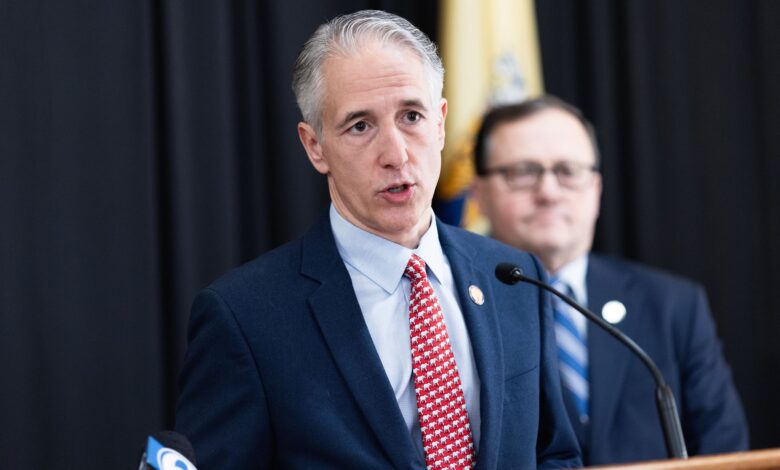
TRENTON, N.J. — Assemblyman Christopher DePhillips introduced legislation Thursday that would reduce New Jersey’s sales and use tax to 6%, down from the current 6.625%, arguing that the tax cut is necessary to ease financial pressure on working families.
DePhillips, a Republican representing Bergen County, framed the proposal as a direct challenge to Democratic lawmakers who have recently emphasized affordability as a priority.
“The Murphy administration has raised taxes by $21 billion and a dozen tax increases were just passed by Trenton Democrats to fund our state budget,” DePhillips said. “It’s time to test their election-year talking points on affordability by pressuring them to slash the sales tax to help struggling families. This is a tax cut people will feel every day, not a gimmick or rebate that only gets processed at politically convenient times.”

In June, Gov. Phil Murphy and Democratic legislative leaders approved a nearly $59 billion state budget that included $843.4 million in new revenue from increased taxes on home sales, cigarettes, gambling and other items. The state sales tax remains the largest single source of general-fund revenue, generating more than $14 billion annually.
DePhillips said lowering the tax would especially help lower-income residents.
“The state sales tax is regressive, disproportionately burdening working families and people living paycheck-to-paycheck,” he said. “Every time a consumer goes shopping, Trenton takes its cut. The state has a real spending problem that is contributing to our affordability crisis.”
New Jersey’s current sales tax rate is lower than the national average of 7.5%, but higher than many neighboring states: Pennsylvania sits at 6.34%, Maryland is at 6.0%, Connecticut at 6.35%, and Delaware does not impose a state sales tax.
“Local economies would get a boost and we would become more competitive if the sales tax was lowered,” DePhillips added. “The costs of energy, car repairs, food and life’s other unavoidable expenses will go down.”
Under the bill, the tax reduction would take effect Jan. 1, 2026, if approved by the Legislature and signed by the governor.
“My tax cut proposal represents an opportunity for New Jersey to take the lead in a good way for once by demonstrating that the state is serious about affordability,” DePhillips said. “If the majority on the other side of the aisle really wants to begin to address the root causes of this crisis, they should start with my bill.”