
Rutgers-Eagleton poll finds New Jersey residents divided on license plate readers, favor stricter safeguards

NEW JERSEY — New Jersey residents are divided over the use of automated license plate readers by local law enforcement, but large majorities support requiring warrants, more frequent audits and shorter data retention periods, according to a Rutgers-Eagleton Poll released Wednesday, Oct. 28.
The statewide survey found that 50% of residents oppose the use of automated license plate readers in their communities, including 30% who strongly oppose them and 20% who somewhat oppose them. Meanwhile, 44% support the technology, including 15% who strongly support it and 29% who somewhat support it.
Despite the divided opinions on the cameras themselves, the poll found broad support for additional restrictions on how police departments use and store the information they collect.

According to the survey, 78% of residents support requiring police departments to audit license plate reader searches monthly rather than annually to ensure they are lawful, while 15% oppose the change. Nearly seven in 10 residents, or 69%, support requiring police to obtain a warrant before searching the data, compared with 24% who oppose that requirement.
Additionally, 66% support requiring license plate reader data to be deleted after six months rather than the three years currently allowed, while 23% oppose the proposal.
Opinions are more closely divided on prohibiting New Jersey police from sharing license plate reader data with law enforcement agencies in other states. The poll found 48% support such a restriction, while 42% oppose it.
“New Jerseyans don’t agree on whether they want these cameras in their communities, but they largely agree on how they should be governed if they are there,” said Ashley Koning, an assistant research professor and director of the Eagleton Center for Public Interest Polling at Rutgers University-New Brunswick. “Requiring a warrant, requiring monthly audits and shortening how long the data is kept each draw majority support across the board, including from the residents most enthusiastic about the technology itself. Sharing the data across state lines is the exception.”
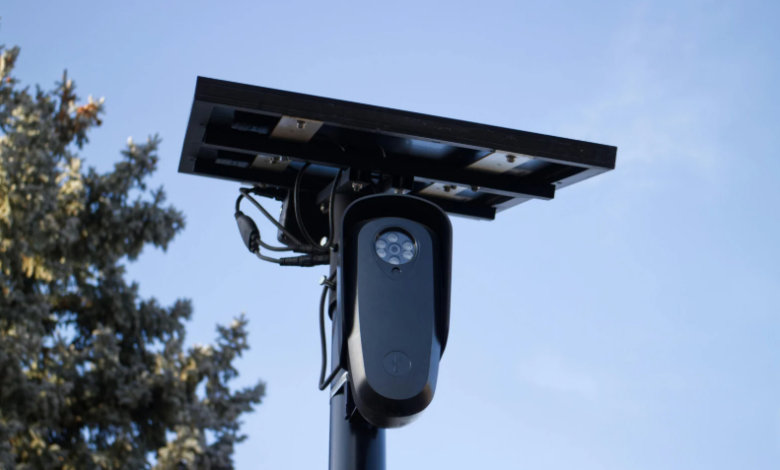
For the survey, respondents were told that automated license plate readers are motion-activated cameras, often mounted on utility poles, that photograph passing vehicles and people while recording the time and location. The images can be processed to identify license plates and stored in databases that law enforcement can search later.
Political affiliation emerged as the largest dividing factor in opinions about the technology, with Republicans more supportive of license plate readers and generally less supportive of restrictions on their use.
The poll found that 67% of Republicans support the technology, compared with lower levels of support among Democrats and independents. Republicans were also less likely to favor requiring warrants before searching the data, with 52% supporting the proposal compared with 74% of both Democrats and independents.
Similarly, 33% of Republicans support prohibiting New Jersey police from sharing license plate reader data with other states, compared with 52% of Democrats and independents. Republican opposition to the proposed sharing restriction reached 62%, including 39% who strongly oppose it.
Independents showed the strongest support for requiring monthly audits at 85%, compared with 75% of Democrats and 72% of Republicans.
Age also played a significant role in attitudes toward the technology. Among residents ages 18 to 34, just 28% support the use of automated license plate readers, compared with 45% of those ages 35 to 49, 48% of those ages 50 to 64 and 55% of residents 65 and older.
Support for requiring warrants declined with age, from 75% among residents ages 18 to 34 to 60% among those 65 and older. Older residents were also more likely to oppose restrictions on sharing data with other states, including 47% of those ages 50 to 64 and 52% of those 65 and older.
“Party and age cut through almost every question here, and they run in the same direction: The residents most comfortable with the cameras are the least interested in limits on them,” said Koning.
The survey also found differences by race and ethnicity. Black residents were the least supportive of automated license plate readers, with 25% favoring their use, compared with 49% of white residents, 45% of Hispanic residents and 42% of residents of other races.
Black residents were more likely than white residents to support prohibiting data sharing with law enforcement in other states, 56% to 42%. However, 66% of Black residents supported monthly audits, compared with 80% of white residents.
Men and women expressed similar levels of overall support for license plate readers, at 43% and 46%, respectively. Men, however, were more likely to favor several proposed restrictions, including monthly audits, warrant requirements and deleting data after six months.
The poll found that 84% of men supported monthly audits, compared with 72% of women. Support for requiring warrants was 73% among men and 65% among women, while 71% of men and 61% of women supported deleting the data after six months.
Household income also influenced opinions. Residents earning less than $50,000 annually were less likely to support automated license plate readers, at 33%, and less likely to favor monthly audits, at 68%, compared with support ranging from 79% to 84% among higher-income groups.
Regional differences were more limited. Residents in South Jersey near Philadelphia and those living in urban areas were more supportive of deleting license plate reader data after six months, at 79% and 73%, respectively, compared with 59% of suburban residents and 55% of exurban residents.
Urban and exurban residents also showed stronger support for monthly audits, at 87% and 86%, respectively, compared with 73% among suburban residents and those living in the Philadelphia-area region.
The findings are based on a statewide survey of 1,004 New Jersey adults conducted Sept. 24-27 through the probability-based Rutgers-Eagleton/SSRS Garden State Panel. The full sample has a margin of error of plus or minus 4.1 percentage points.


