Rutgers study finds True Grit program helps young adults with spinal cord injuries build independence

NEW JERSEY — A Rutgers Health study found that a residential program designed for young people with spinal cord injuries helped participants make progress toward personal goals and build confidence as they prepare for adulthood.
The study, published in Topics in Spinal Cord Injury Rehabilitation, evaluated outcomes from True Grit, a program offered by the Rutgers School of Health Professions and RWJBarnabas Health’s Children’s Specialized Hospital. The program serves young people ages 14 to 21 with spinal cord injuries.
According to the U.S. Department of Health and Human Services, about 18,000 new spinal cord injuries are reported annually.

“There is a high incidence of traumatic spinal cord injuries, specifically in young males, in adolescence,” said Keara McNair, a lecturer in the school’s Department of Rehabilitation and Movement Sciences who co-directs the program with Kassandra Boyd, an occupational therapist at Children’s Specialized Hospital. “People with spinal cord injuries are getting discharged into the community sooner. While there are services to help adults return to work, there are no programs in the nation that specifically target the transition to adulthood for young adults. True Grit is designed to bridge that gap.”
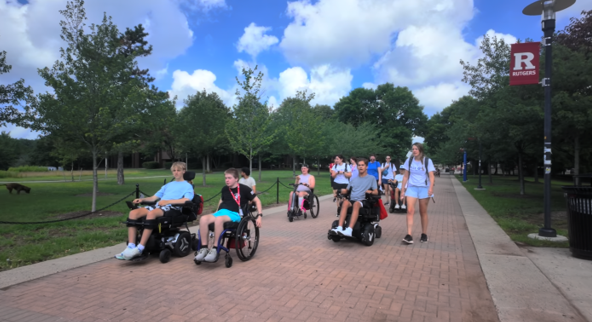
True Grit has been held each summer since 2024 as a weeklong residential program based in dormitories on Rutgers University-New Brunswick’s Livingston Campus in Piscataway.
The program brings together occupational, physical and recreational therapists with clinical experience in spinal cord injury rehabilitation, along with peer mentors. Participants take part in therapeutic, recreational, social and independence-building activities aimed at developing life skills.
In addition to individualized occupational and physical therapy sessions, participants take part in adapted recreational activities such as wheelchair basketball, community outings and workshops addressing vocational planning, sexuality, adapted driving and psychosocial adjustment to injury.
Researchers evaluated short-term outcomes for six participants in the program’s 2024 cohort. Participants completed surveys at the beginning of the program and three months later examining their goals, resilience and participation at home, school and in the community.
Researchers also used specialized rehabilitation measures to track progress toward personalized goals, emotional resilience following spinal cord injury and social and community involvement.
According to Rutgers Health, all six participants demonstrated progress toward their individual goals. Overall participation scores also increased, with the largest gains among participants who had lower levels of participation when they entered the program.
The study also identified challenges participants faced after returning home, including transportation barriers and limited access to peers, which affected participation and resilience.
“After the program the participants described significant shifts in how they viewed their futures, which included higher education, employment, independent living and serving as peer mentors,” said McNair, an author of the study. “Each year the program grows in size. We have enrolled 12 participants for 2026 and since this program is unique, participants continue to come from across the nation.”
The study was co-authored by Aaron Dallman of the Rutgers School of Health Professions and Kassandra Boyd and Corinne Calvanico, a 2025 graduate of Rutgers’ occupational therapy doctoral program, of Children’s Specialized Hospital.