Senate Democrats reject GOP-proposed amendments aimed at easing New Jersey energy costs

TRENTON, N.J. — A series of proposed amendments from Senate Republicans intended to address rising energy costs in New Jersey were voted down by Senate Democrats on Monday, June 2.
The proposed amendments were offered in response to a 20% increase in electricity rates that took effect recently, impacting households across the state.
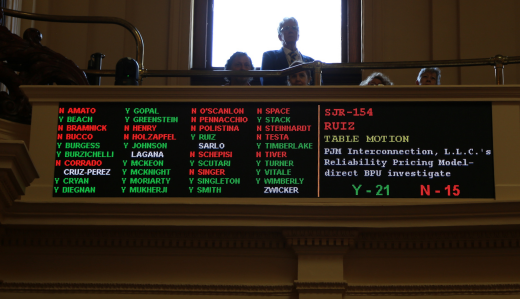
Senate Republican Leader Anthony M. Bucco (R-25), along with Senators Michael Testa (R-1), Holly Schepisi (R-39), Robert Singer (R-30), and Joe Pennacchio (R-26), introduced amendments during discussion of energy-related legislation, including Senate Joint Resolution 154 and Assembly Bill 5466/Senate Bill 4318.

Bucco, a member of the Select Committee on Rising Energy Rates, sought to expand the scope of an investigation into energy pricing to include the New Jersey Board of Public Utilities (BPU), rather than leaving the probe solely in its hands.
“Numerous stakeholders and experts clearly said the policies coming out of Trenton are contributing to our energy shortage and subsequent skyrocketing energy bills,” Bucco said.
Senator Testa criticized the BPU’s role in regulating utility services and questioned the agency’s ability to oversee any internal investigation into rate increases. “Allowing the BPU to be the investigative body is akin to allowing the fox to watch the hen house,” he said.
Schepisi, Singer, and Pennacchio echoed concerns about the BPU’s decision-making and oversight. Pennacchio proposed an amendment to suspend the societal benefits charge and sales tax on electricity bills, which was also rejected.
Senate Republicans have introduced several bills in recent years to address energy affordability, including legislation to suspend fees on utility bills and a measure to abolish the BPU. None have advanced in the Democrat-controlled Legislature.
The BPU and Democratic legislative leadership have not yet issued public responses to the latest proposals.
The issue of energy pricing remains a topic of legislative debate as New Jersey continues to implement its clean energy goals outlined in the state’s Energy Master Plan.