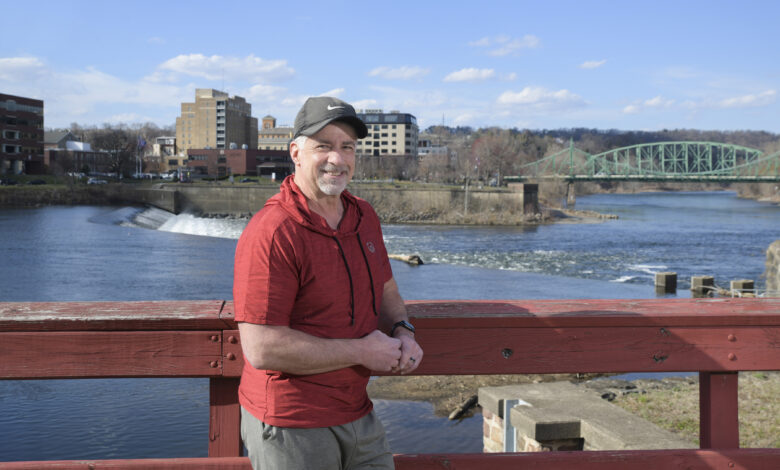
Mike Pittaro, Ph.D., 58, has a high-stress lifestyle. As the director of corrections for Northampton County, he also teaches and writes books. So, when he began feeling unwell for several weeks—experiencing mild chest pain—he attributed it to job stress, caffeine, or spicy food.
But just before Thanksgiving in 2024, Pittaro’s symptoms escalated. While reading emails, he suddenly felt dizzy, nauseous, and his vision became blurry. He asked a coworker to call the nurse from the medical department. An ambulance was called, and he was taken to St. Luke’s Anderson Campus. Believing he was having a heart attack, Pittaro braced for the worst.
Thanks to the expert team at St. Luke’s, Pittaro did not experience the worst. He received care that helped him regain his health—without surgery.

St. Luke’s Heart & Vascular is an eight-time nationally ranked 50 Top Heart Hospital. The program is dedicated to delivering unmatched, patient-centered care and is known for using innovative technologies to treat both complex and routine heart and vascular conditions. Since performing open-heart surgery in 1983, St. Luke’s has continued to lead the region in pioneering new and advanced procedures.
Initially, doctors believed Pittaro might have ventricular fibrillation—a condition where the heart quivers instead of pumping normally. While not as serious as a heart attack, it often still requires surgery and an implant. But after further testing, Electrophysiologist Steve Stevens, M.D., diagnosed Pittaro with ventricular tachycardia, a type of abnormal heartbeat that turned out to be a more favorable outcome.
“There’s a really big difference between [ventricular fibrillation and ventricular tachycardia], and Dr. Stevens was really cool about it,” Pittaro said. “He showed us graphs and gave us detailed explanations and said he didn’t think we needed to do surgery. Immediately, I had a sigh of relief.”
St. Luke’s follows a “cut last” philosophy, using surgery only as a last resort. Stevens sent Pittaro home with a heart rate monitor to track his condition for 30 days and a list of small lifestyle changes to help manage it.
“I went from ‘I should be almost dead to not dead but need surgery to making sure I’m not dead with some lifestyle changes,'” Pittaro said.
In the months following his diagnosis, Pittaro made key changes to his lifestyle. He scaled back on strength training, focused more on cardiovascular exercise, increased his intake of fruits and vegetables, and cut out caffeine. He also limited certain carbohydrates and began practicing mindfulness to manage his stress—something he calls his “arch enemy.”
Throughout his experience, Pittaro said he was consistently impressed by the thorough, compassionate care he received at St. Luke’s, which helped make a frightening situation less overwhelming. When his mother suffered a heart attack in January and underwent similar testing, Pittaro was relieved she was treated at St. Luke’s as well.
“She saw the same team I saw,” he said. “My mom and dad have nothing but praise. They took good care of her.”