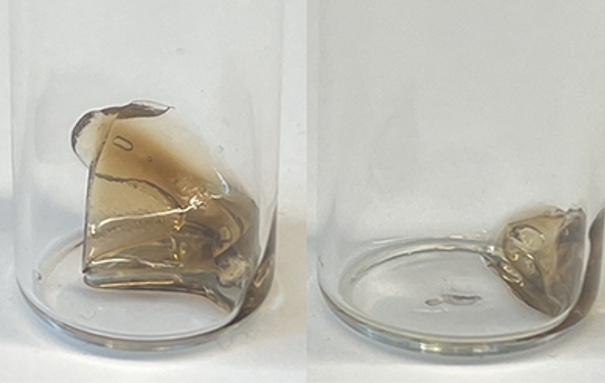
Rutgers scientists develop plastics that can break down naturally, offering potential solution to global waste

A Rutgers University chemist who found inspiration while hiking through Bear Mountain State Park has led a team of scientists in developing plastics that can break down naturally and at controlled speeds — a potential breakthrough in tackling global plastic pollution.
Yuwei Gu, an assistant professor in the Department of Chemistry and Chemical Biology in the Rutgers School of Arts and Sciences, said he was struck by the sight of plastic bottles scattered along a wooded trail and floating in a lake. The contrast with the natural environment prompted him to question why human-made polymers persist for decades while natural polymers — such as DNA, RNA and cellulose — eventually degrade.
“Biology uses polymers everywhere, such as proteins, DNA, RNA and cellulose, yet nature never faces the kind of long-term accumulation problems we see with synthetic plastics,” Gu said.

As he reflected on the problem in the woods, he realized the answer lay in chemistry. Natural polymers, he said, contain built-in structural groups that help break chemical bonds when their useful life ends.
“I thought, what if we copy that structural trick?” he said. “Could we make human-made plastics behave the same way?”
The answer, according to a study published in Nature Chemistry, is yes. By using a design principle found in nature, Gu and his team created plastics that break down under everyday conditions — without heat, special treatments or harsh chemicals.
“We wanted to tackle one of the biggest challenges of modern plastics,” Gu said. “Our goal was to find a new chemical strategy that would allow plastics to degrade naturally under everyday conditions without the need for special treatments.”
A polymer is made up of repeating units linked like beads on a string. Plastics are polymers, as are natural materials such as DNA, RNA and proteins. Strong chemical bonds make plastics durable, but also make them resistant to degradation. Gu’s team redesigned certain bonds so they remain strong during use but become much easier to break when triggered.
The advance also allows for programmable degradation — plastics can be engineered to break down over days, months or years depending on how the chemical groups are arranged.
“Most importantly, we found that the exact spatial arrangement of these neighboring groups dramatically changes how fast the polymer degrades,” Gu said. “By controlling their orientation and positioning, we can engineer the same plastic to break down over days, months or even years.”
The degradation can be activated with time, ultraviolet light or metal ions, giving manufacturers the ability to match a product’s lifespan to its purpose — from take-out packaging meant to last hours to car parts designed to endure for years.
Beyond tackling plastic pollution, the research could enable innovations such as timed drug-release capsules and self-erasing coatings.
“This research not only opens the door to more environmentally responsible plastics but also broadens the toolbox for designing smart, responsive polymer-based materials across many fields,” Gu said.
Early lab tests suggest the liquid produced when these plastics break down is not toxic, but Gu emphasized that more research is needed to confirm long-term safety.
Gu said he is still amazed that an idea sparked on a quiet mountain trail led to such promising results.
“It was a simple thought, to copy nature’s structure to accomplish the same goal,” he said. “But seeing it succeed was incredible.”
The research team is now studying whether breakdown byproducts pose environmental risks, how the chemistry can be applied to standard plastics, and whether the method can be integrated into current manufacturing. They also are exploring medical applications such as timed-release drug capsules.
Other Rutgers researchers involved in the study include Shaozhen Yin, the paper’s first author; Lu Wang and Rui Zhang; N. Sanjeeva Murthy; and Ruihao Zhou.