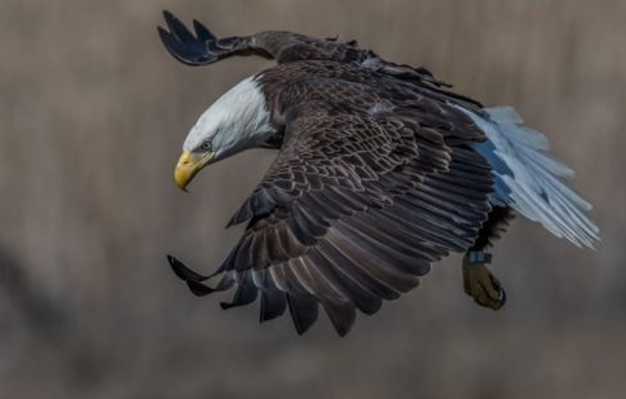
N.J. bald eagle nests decline slightly, likely due to avian flu, report finds

NEW JERSEY — New Jersey’s bald eagle population saw a slight decline in active nests in 2025, likely due to the effects of avian flu, according to a new state report.
The annual New Jersey Bald Eagle Project Report identified 251 nests that produced eggs last year, down 5% from a record 264 in 2024. The report was compiled by the state Department of Environmental Protection’s Fish & Wildlife division in partnership with the Conserve Wildlife Foundation of New Jersey.
“The Department of Environmental Protection’s work to restore New Jersey’s bald eagle population has been so remarkable that the species, once on the brink of extirpation in New Jersey, was removed from the state’s endangered species list last year,” said Acting DEP Commissioner Ed Potosnak. “This success, made possible with the support of countless volunteers over the years, is proof that DEP can deliver against seemingly insurmountable odds. This slight decline in active nests reminds us that we must remain steadfast in our efforts to protect bald eagles for future generations to admire.”

Officials said the decrease is likely tied to Highly Pathogenic Avian Influenza, or bird flu, which has affected wild bird populations nationwide since 2022. Eagles, as birds of prey, can contract the virus by feeding on infected waterfowl such as Canada geese and snow geese.
State data showed that 28 of 56 tested bald eagle deaths in 2025 — about 50% — were linked to avian flu, an unusually high rate. Other causes of death included vehicle strikes, trauma and electrocution.
“While there is little that conservation agencies can do to prevent the spread of avian influenza in wild bird populations, NJDEP Fish & Wildlife continues to monitor the situation closely and keep the public informed about its presence in wildlife and our communities,” said NJDEP Fish & Wildlife Assistant Commissioner Dave Golden. “Because bald eagles are particularly susceptible to HPAI transmission, it is vital that the public stay informed and help us protect these majestic birds from human-related threats.”
Despite the decline, officials said the state’s bald eagle population remains a conservation success story. In the early 1980s, New Jersey had just one known nesting pair. Recovery efforts over the decades, including habitat protection and reintroduction programs, helped the population rebound to record levels in recent years.
In 2025, officials monitored 298 territorial eagle pairs statewide, including 251 active nests and 47 pairs that maintained territories but did not lay eggs. Of the nests with known outcomes, about 71% were successful, producing a total of 271 young.
The DEP is urging residents to report any disturbances near eagle nests, such as construction or human activity within 1,000 feet, to help protect the species as it continues to recover.