Rutgers study links social media beauty content to increased personal care product use among teens

NEW JERSEY — Teenagers who follow social media influencers or watch beauty tutorials use more personal care products, potentially increasing their exposure to hormone-disrupting chemicals, according to a Rutgers-led study.
The study, published in the Journal of Exposure Science & Environmental Epidemiology, surveyed 143 students at Princeton High School in New Jersey and examined their use of personal care products and engagement with social media.
After accounting for gender, grade, race, ethnicity and parents’ education, researchers found that students who followed influencers with product lines reported using 30% more personal care products during the previous 24 hours. Students who watched hair or beauty tutorials used 40% more products.

“Social media turned out to be the most interesting part of our results,” said Emily Barrett, the George G. Rhoads Endowed Legacy Professor and vice chair of the Department of Biostatistics and Epidemiology at the Rutgers School of Public Health and the lead author of the study.
“We often hear that social media may hurt kids’ mental health and socioemotional development,” she added. “This study suggests another cause for concern: social media’s potential to increase the use of personal care products that often include hormone-disrupting and potentially carcinogenic chemicals.”
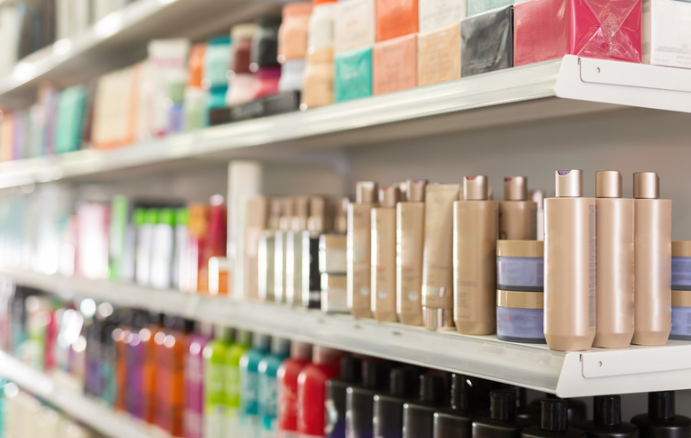
Personal care products examined by researchers included soap, toothpaste, shampoo, deodorant, sunscreen, skin care products, fragrances and makeup. Some products contain phthalates, parabens, phenols or other chemicals that may affect hormone signaling and cancer risk, according to the researchers.
“Teenagers are a particularly interesting population to study because they are undergoing rapid changes, including in their hormone systems,” Barrett said. “It may be a sensitive period in which better product choices could reduce chemical exposure.”
Girls surveyed reported using a median of 14 products during the previous day, twice the number reported by boys. In addition to nearly universal use of soap and toothpaste, 57% of students reported using fragrances.
Researchers said fragrances often use endocrine-disrupting phthalates without listing them on product labels.
Although students expressed some concern about potential chemical exposure, researchers found relatively few routinely took steps to evaluate products. Nineteen percent said they regularly read ingredient lists, while 5% regularly used an app or website intended to identify healthier products.
“Teenagers don’t read labels, it turns out,” said Vita Moss-Wang, who was a sophomore at Princeton High School when the project began and is now a sophomore at Wellesley College.
The study’s focus on social media grew out of a collaboration between Rutgers researchers and then-Princeton High School students Moss-Wang and Gabrielle Kaputa. The students helped design and conduct the survey and suggested researchers include questions about social media use.
The collaboration began in 2023 after researchers from the Rutgers Center for Environmental Exposures and Disease approached Princeton High School’s research program. Moss-Wang and Kaputa helped prepare research ethics materials, develop recruitment materials, visit classes and track responses. A second recruitment effort included high school students participating in Rutgers summer programs.
“Dr. Barrett allowed us to manage the high school population outreach and data collection,” said Kaputa, now a junior at the University of Connecticut. “We identified interesting aspects of social media exposure within our student questionnaires.”
Both students became coauthors of the scientific paper.
Researchers are now conducting follow-up focus groups to determine which social media accounts, messages and influencers have the greatest effect on teenagers’ choices.
They said larger studies involving more diverse communities could determine whether the findings hold across broader populations and could combine product inventories with urine samples to measure chemical exposure.
The study was supported by the National Institute of Environmental Health Sciences through the Rutgers Center for Environmental Exposures and Disease.