Rutgers study finds aerobic exercise may improve thinking skills in postmenopausal women

NEW JERSEY — Regular aerobic exercise may improve key thinking skills known as executive functions, with the benefits appearing particularly strong among postmenopausal women, according to a new Rutgers study.
Executive functions are cognitive skills used to plan, stay focused, switch between tasks and maintain independence. Researchers noted that these abilities can become more difficult during and after the menopause transition.
The study, led by Sharon Sanz Simon, an assistant professor of psychiatry at Rutgers New Jersey Medical School and a core faculty member of the Herbert and Jacqueline Krieger Klein Alzheimer’s Research Center within the Rutgers Brain Health Institute, was published in the Journal of Alzheimer’s Disease.

Researchers studied 93 healthy women between the ages of 20 and 67, with 43% classified as postmenopausal.
“All participants began the study with below-average cardiorespiratory fitness levels and were not regularly exercising – making the results directly relevant to typical midlife and older women, not only those who are already active,” Sanz Simon said.
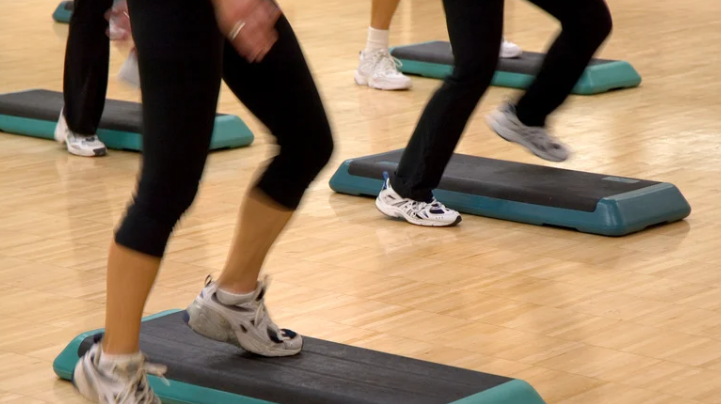
Participants were randomly assigned to one of two six-month programs — aerobic exercise or stretching and toning. Researchers measured cognitive performance throughout the trial to track changes in executive function.
“Post-menopausal women who completed aerobic exercise showed greater improvements in executive function — measured through standardized assessments of task-switching speed and error management — compared to women in the stretching group and more than pre-menopausal women doing the same aerobic program,” Sanz Simon said. “We observed measurable cognitive gains at three months into the program, and those benefits continued to strengthen through the six-month trial period.”
About eight in 10 participants completed at least three months of the program, while about seven in 10 completed the full six months.
Researchers found the improvement was specific to executive functions. Other cognitive abilities measured in the study, including memory and processing speed, did not show the same gains.
“Many women report easier time switching between tasks, better ability to plan and organize, improved focus and mental flexibility, and feeling sharper in daily activities,” Sanz Simon said.
Based on the study’s findings, Rutgers Brain Health Institute experts outlined an aerobic exercise approach consisting of three to four one-hour sessions each week for at least three to six months.
Each session includes a 10- to 15-minute warm-up and gentle stretching followed by 45 minutes of continuous moderate aerobic activity. Suggested activities include brisk walking, light jogging, cycling, elliptical training, swimming, water aerobics and dance-based cardio.
Researchers said consistency is more important than the particular activity selected and recommended gradually increasing exercise intensity.
The researchers noted that women account for two-thirds of Alzheimer’s disease diagnoses and said hormonal changes around midlife could represent an important period for protecting long-term brain health.
The study involved researchers from Rutgers New Jersey Medical School, the Krieger Klein Alzheimer’s Research Center at the Rutgers Brain Health Institute, Albert Einstein College of Medicine, Columbia University and the Nathan S. Kline Institute for Psychiatric Research.
Researchers said additional studies will examine how lifestyle interventions may help preserve cognitive health throughout the lifespan.