Rutgers researcher warns federal ban on lab-modified opioids could hinder medical research

NEW JERSEY — Federal restrictions on three powerful laboratory-modified opioids derived from kratom could create new challenges for medical researchers studying potential treatments for pain and opioid dependence, according to a Rutgers Health scientist.
In August, the U.S. Department of Justice and Drug Enforcement Administration placed three laboratory-made opioids, known as MGPI, MGM-15 and MGM-16, into Schedule I of the Controlled Substances Act, the federal government’s most restrictive drug classification.
The compounds are chemically modified versions of substances associated with kratom, a tropical tree native to Southeast Asia. The substances have been identified as posing significant risks of addiction and potentially life-threatening respiratory depression.

Jenny Wilkerson, a core faculty member at the Rutgers Brain Health Institute and assistant professor of anesthesiology at Rutgers New Jersey Medical School, said the restrictions highlight the need to balance public safety with scientific research.
According to Wilkerson, kratom leaves have been used traditionally in Southeast Asia for centuries. Over the past two decades, kratom products have become increasingly available in the United States, where some people use them to manage pain, increase energy, improve mood or address opioid withdrawal symptoms.
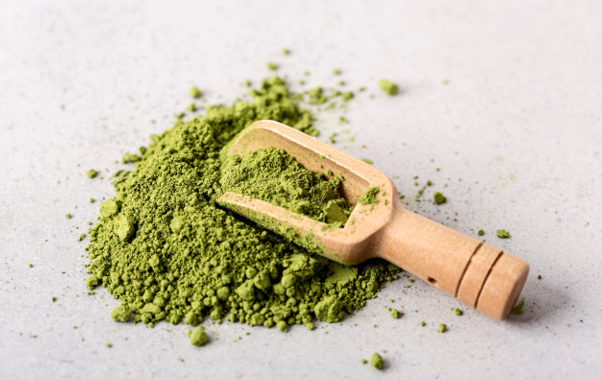
The products are sold in several forms, including dried leaves, powders, capsules, extracts and concentrated formulations. They are commonly found in gas stations, smoke shops, supplement stores and online marketplaces.
Wilkerson said an important distinction must be made between traditional botanical kratom and highly concentrated or chemically modified products containing compounds such as 7-hydroxymitragynine.
Although these substances may share chemical origins, they can affect the body differently and should not be treated as interchangeable, she said.
The growing availability of concentrated kratom-derived products has raised concerns about their potency and potential health risks.
According to Wilkerson, using the general term “kratom” to describe the plant, its naturally occurring compounds, concentrated extracts and laboratory-modified substances can be misleading because the products have different effects and safety profiles.
The Justice Department has said the federal restrictions specifically target manufactured and concentrated opioid compounds rather than traditional botanical kratom.
However, Wilkerson cautioned that the exclusion of whole-plant kratom from the scheduling action does not mean it is without risks.
Repeated kratom use can lead to tolerance, physical dependence and withdrawal symptoms. Concerns also remain about product quality, contamination, adulteration and potentially dangerous interactions with other substances.
The U.S. Food and Drug Administration has not approved kratom as a medication and does not consider it lawfully marketed as a dietary supplement in the United States.
Wilkerson said the new federal restrictions could also create obstacles for scientists attempting to better understand the medical potential and risks of kratom-related compounds.
Schedule I substances are subject to strict federal controls, including requirements governing how researchers obtain, store, administer and study them in laboratory settings.
While those safeguards are intended to protect public health, Wilkerson said they can make scientific investigations more complicated.
Researchers are still examining how kratom and its active chemical compounds interact with the body, whether they could have legitimate medical applications and what adverse effects they may cause.
The research includes efforts to better understand the compounds’ potential effects on pain and opioid-related conditions, along with the risks associated with their use.
Wilkerson’s assessment underscores the challenge facing federal regulators as they seek to restrict potentially dangerous synthetic opioids while allowing scientists to investigate their effects and possible medical uses.
The distinction between traditional kratom, concentrated extracts and chemically modified derivatives remains central to both the public health discussion and future medical research.