
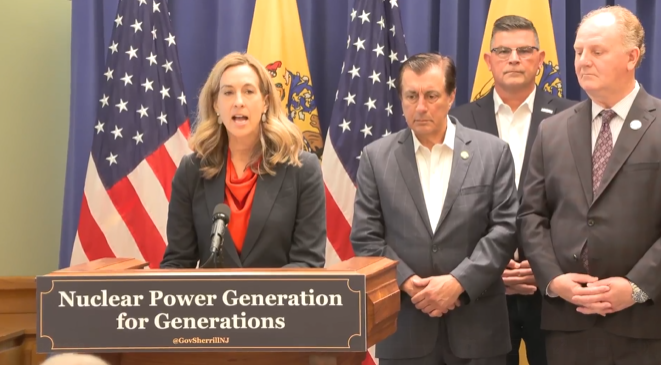
Gov. Sherrill signs Power NJ Act to launch nuclear energy procurement process

TRENTON, N.J. — Gov. Mikie Sherrill on Monday signed the Power NJ Act, launching New Jersey’s procurement process for new nuclear energy projects while establishing safeguards designed to protect ratepayers from construction costs and project overruns.
The legislation, which passed both houses of the Legislature unanimously with bipartisan support, directs the New Jersey Board of Public Utilities and the New Jersey Economic Development Authority to jointly oversee a competitive process to procure at least 1,100 megawatts of new nuclear generation.
“The decisions we make today will determine the future we leave our kids, so we are putting New Jersey on a path to an affordable and secure energy future,” said Governor Mikie Sherrill. “I am excited to launch our state’s process to procure new, advanced nuclear power that will provide clean, reliable energy at scale for generations to come and meet our growing energy demands – from powering our small businesses, schools, and hospitals, to strengthening grid capacity and reliability for extreme weather that is becoming unfortunately all too frequent.”

State officials said the law includes several consumer protections, including provisions preventing ratepayers from paying for projects during construction or covering project cost overruns. Developers also must secure federal financing, demonstrate a net benefit to ratepayers, and participate in multiple public comment periods and hearings before a project can receive final approval.
The legislation also requires the BPU and NJEDA to consider independent assessments from the Division of Rate Counsel throughout the review process.
According to the governor’s office, nuclear energy currently provides more than 40% of New Jersey’s electricity and more than 80% of its clean energy supply. Nuclear plants also typically operate at 90% to 95% capacity.
The bill follows Sherrill’s action in April lifting New Jersey’s 50-year moratorium on new nuclear development and is part of the administration’s broader energy strategy aimed at expanding electricity generation while addressing affordability.
Under the timeline established by the law, the BPU must issue a request for expressions of interest within 180 days. Developers will then have 60 days to submit proposals, followed by a 90-day qualification period. Negotiations with qualified developers could continue through April 2028 before the BPU considers issuing a final order, provided a project demonstrates a net benefit to ratepayers, reasonable costs and secured federal financing.
Under the law, electricity suppliers would begin purchasing Reliable Capacity Credits only after a new nuclear facility is completed and producing power.


