Underwater inspections underway at 19 Delaware River Joint Toll Bridge Commission crossings

NEW JERSEY – Underwater inspections are underway on piers supporting 19 of the 20 Delaware River crossings owned and operated by the Delaware River Joint Toll Bridge Commission, according to the agency.
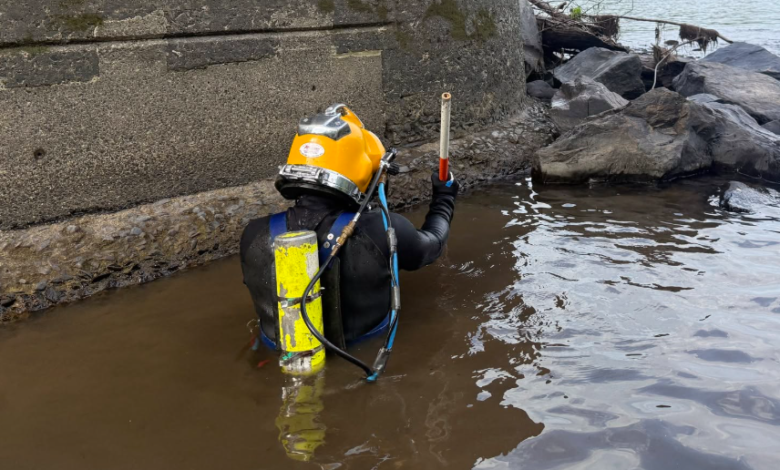
The inspections include the Centre Bridge-Stockton Toll-Supported Bridge, where crews on Tuesday, Sept. 1, evaluated the structure’s in-water piers for a variety of potential issues.
The commission awarded the inspection work to Pickering, Corts & Summerson Inc. of Newtown, Pennsylvania, for an amount not to exceed $399,194.68.

Consulting engineers conduct the underwater examinations every five years in accordance with National Bridge Inspection Standards, the commission said.
The engineering firm’s assessments include examining the physical condition of bridge substructure elements and protective devices, conducting bathymetric surveys at piers, examining cross sections upstream and downstream and evaluating streambed materials, waterway channels and channel protective materials.
The inspections also include assessments for observed scour, which occurs when rock, gravel or sand is eroded from around bridge piers and abutments. According to the commission, scour is the most common cause of highway bridge failures in the United States and is responsible for more than 60% of bridge collapses.
Pickering, Corts & Summerson is also responsible for project management, administration and coordination with agencies necessary to safely complete the inspections.
Field inspections at all 19 crossings are expected to be completed next week.
The Easton-Phillipsburg Route 22 Toll Bridge is the only commission river crossing not included because it is supported entirely by two land-based piers and does not require river piers. Land-based substructures that remain dry during normal river levels are inspected every two years by the commission’s general engineering consultant.
If an inspection identifies a potentially major issue at a bridge, the consultant is required to immediately notify the commission so officials can determine whether immediate corrective or remedial measures are warranted.
Following completion of the inspections, the engineering firm will provide the commission with a comprehensive report summarizing its findings. The report will include photographs, sketches showing any scour or undermining conditions, conclusions, recommendations and estimated costs for repairs or corrective actions at affected crossings.