
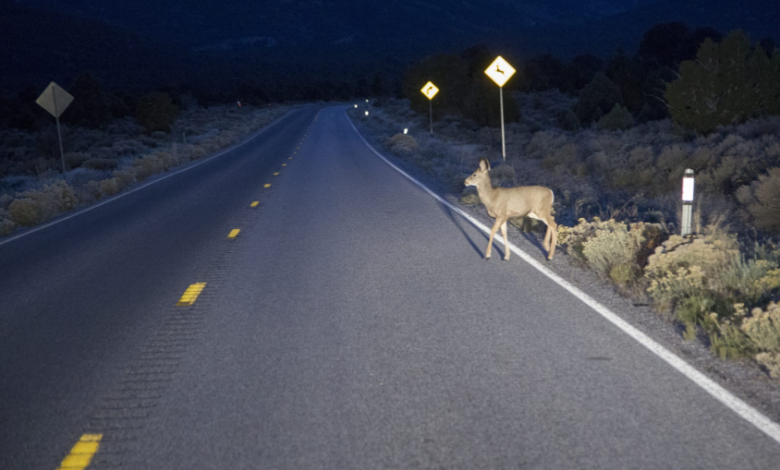
NEW JERSEY — The New Jersey Department of Environmental Protection is urging motorists to use extra caution on roadways as the fall deer mating season gets underway, bringing increased white-tailed deer activity and a greater risk of vehicle collisions.
According to the DEP, deer are more likely to be found near or crossing roadways during mating season, commonly known as the fall rut, as male deer pursue females. The increased activity often coincides with morning and evening commutes, when darkness and sun glare can make it more difficult for drivers to spot animals.
“Collisions with deer pose a very serious safety threat and can cause significant damage to vehicles and possible loss of life,” said Dave Golden, Assistant Commissioner for NJDEP Fish & Wildlife. “It’s especially important that drivers be extra vigilant to this threat and take time to know steps that can be taken to reduce the risk of collision.”

Peak deer mating season in New Jersey typically runs from mid- to late October through mid-December. State officials said visibility concerns will become more pronounced when daylight saving time ends at 2 a.m. Sunday, Nov. 1, bringing sunset earlier and causing evening commutes to overlap more closely with periods of increased deer activity.
The DEP is encouraging motorists to slow down and remain alert, particularly when traveling through wooded areas or locations where deer are frequently seen. Drivers should also pay attention to deer crossing signs and be prepared to stop if an animal enters the roadway.
If a deer is spotted on or near the road, motorists should reduce their speed and watch for sudden movements. If the animal remains in the roadway, drivers should wait until it crosses and the road is clear rather than attempting to drive around it.
Officials also warn that deer often travel in groups, meaning additional animals may be nearby even if only one is visible. Drivers should avoid following other vehicles too closely because motorists ahead may need to brake suddenly to avoid a collision.
During nighttime travel, the DEP recommends using high beams when there is no oncoming traffic or vehicle directly ahead. High beams can help illuminate deer along the roadside because their eyes reflect the light.
Motorists are also reminded to wear seat belts, obey posted speed limits and adjust their driving to account for weather, lighting, traffic, curves and other roadway conditions. Drivers should avoid using cellphones or other distractions and comply with New Jersey’s hands-free driving law.
One of the department’s most important safety recommendations is to avoid swerving if a collision with a deer appears unavoidable. Instead, motorists should apply their brakes appropriately and remain in their lane, as swerving can lead to more serious crashes involving oncoming vehicles, trees or other roadside structures.
The DEP said drivers involved in a deer-vehicle collision should immediately report the crash to a local law enforcement agency.
Additional information about white-tailed deer in New Jersey is available at https://dep.nj.gov/njfw/wildlife/white-tailed-deer/.
Information about deer hunting seasons and regulations is available at https://dep.nj.gov/njfw/hunting/deer-seasons-and-regulations/.


