NEW JERSEY — A Rutgers University researcher is investigating whether autism spectrum disorder may originate during pregnancy, focusing on biological signals exchanged between a mother, fetus and placenta.
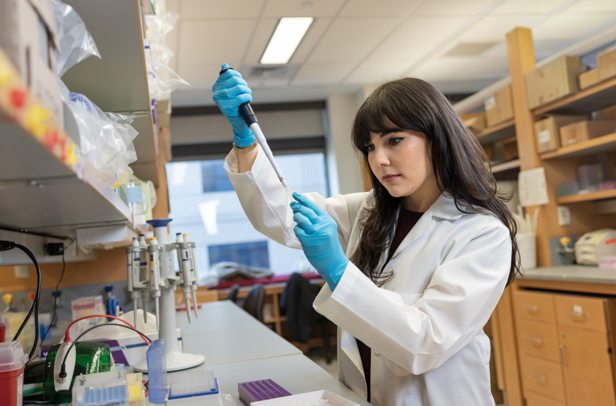
Morgan Firestein, a core member of the Rutgers Brain Health Institute and resident scientist at the Child Health Institute of New Jersey, is leading research that examines whether changes in extracellular vesicles during pregnancy could play a role in the development of autism.
In the decades-long search for autism’s origin, researchers have explored a range of possible causes, from environmental influences to genetic factors. Despite decades of study and significant research funding since autism was first identified in 1943, scientists have yet to pinpoint the precise biological mechanisms behind the disorder.

Firestein believes the key may lie in early development.
“It just seemed biologically probable that the origin of autism could be traced back to pregnancy,” said Firestein, who joined Rutgers in September 2025.
Firestein, an assistant professor of pediatrics at Rutgers Robert Wood Johnson Medical School, is studying whether maternal-fetal-placental signaling through microscopic particles known as extracellular vesicles influences the development of autism spectrum disorder.
Her work is supported by a Pathway to Independence Award from the National Institutes of Health, a competitive grant designed to support emerging researchers.
Interest in the research has been growing among scientists. Firestein recently presented findings from the project at the 11th annual Rutgers Brain Health Institute Symposium in Piscataway, where researchers and industry professionals gathered to discuss advances in brain health research.
“Morgan’s presentation was one of the most exciting at our BHI symposium,” said Gary Aston-Jones, director of the Brain Health Institute. “Her work on extracellular vesicles containing RNA as vehicles for communication among the fetus, mother and placenta is particularly novel and exciting and has implications not only for child health but could also be relevant to a variety of other domains in brain function.”
Extracellular vesicles circulate through the bloodstream and allow cells to communicate with one another, sending signals that can influence biological processes in other parts of the body. Scientists have begun to identify links between these vesicles and certain pregnancy complications, as well as mental health and neurological conditions such as depression, bipolar disorder, schizophrenia and autism.
Firestein’s research aims to connect these two lines of study by determining whether changes in extracellular vesicles during pregnancy could serve as early biological indicators of autism or reveal underlying developmental mechanisms.
Currently, autism is diagnosed primarily through behavioral evaluation, typically after a child’s first year of life. There is no blood test or universal genetic marker for the condition, although a small number of genetic mutations are known to lead to autism diagnoses.
Researchers say earlier detection could be critical because early intervention has been shown to improve social and cognitive development for many children.
“Morgan’s research is incredibly innovative and synergistic,” said Wayne W. Fisher, the Henry Rutgers Endowed Professor of Pediatrics at Rutgers Robert Wood Johnson Medical School and former inaugural director of the Rutgers Center for Autism Research, Education and Services. “It has already generated new collaborations among autism researchers and clinicians across multiple Rutgers units and Children’s Specialized Hospital.”
Firestein’s interest in autism research began during her undergraduate years at Columbia University, where she initially studied film before switching to psychology and philosophy. While volunteering in a classroom at NYC Autism Charter Schools, she said the experience shaped her career path.
“I fell in love with the kids and became enthralled with the completely different way that they saw the world,” she said.
Firestein earned her doctorate in psychology from Columbia in 2020 and completed postdoctoral training at Columbia University Medical Center, where she studied relationships between extracellular vesicles and child neurobehavioral outcomes.
At Rutgers, her laboratory focuses on clinical and translational research aimed at understanding childhood neurodevelopmental disorders and identifying early biomarkers that could guide future treatments.
Firestein said growing public attention to autism research may help advance scientific understanding of the disorder.
“Having the public focused on a topic like autism is good,” she said. “It brings more funding, both private and federal, and greater awareness also means reduced stigma for people with an autism diagnosis.”