
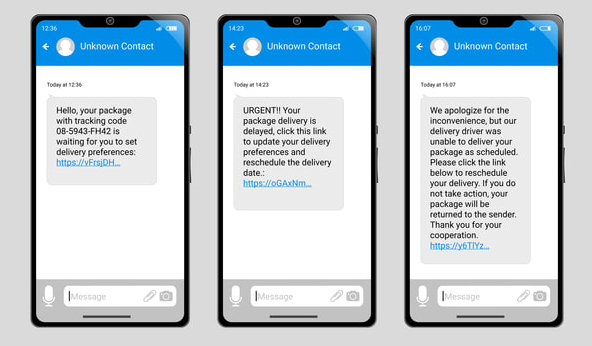
With millions of packages shipped each year, scammers are increasingly targeting shoppers with fake delivery alerts designed to steal personal information and money, according to the Better Business Bureau.
The BBB says delivery-related scams spike during the holiday season, when consumers are busy and more likely to be expecting packages, but the schemes occur year-round. Many scams begin with a text message or email claiming to be from a major carrier and urging recipients to click a link to resolve a supposed delivery issue.
“For years now, some consumers have been getting text messages stating that a major delivery carrier needs them to ‘update delivery preferences’ on a package by clicking a link,” the BBB said. “The problem? The texts are scams, and the links result in the theft of personal information, money, or both.”

According to the BBB, one of the most common schemes involves phishing messages that appear to come from USPS, UPS or FedEx. These messages often include a tracking link or claim a package could not be delivered. Clicking the link can lead to a fake website that asks for personal details or installs malware on the user’s device.
One consumer reported to BBB Scam Tracker receiving a text claiming to be from FedEx Ground that said a package required a signature and would be returned if delivery was not rescheduled through a provided link. The message included detailed instructions to make the link work, which the BBB says is a red flag.
Another frequent tactic involves fake missed-delivery notices left on doors, asking residents to call a phone number to arrange delivery. In one report, a victim said a notice claimed a check needed to be delivered but required payment of delivery charges, which turned out to be fraudulent.
The BBB also warns about false claims that a package is being held at an airport or warehouse until a fee is paid. In one case reported to the BBB, a consumer lost $180 after being told to send money via Zelle to release a shipment that did not exist.
Other scams include messages claiming an “incomplete address” prevented delivery and urging recipients to click a link to confirm details. These messages often mimic the language and branding of legitimate carriers to appear authentic.
Not all delivery-related crimes are digital. The BBB notes that package theft remains a significant issue, with thieves stealing parcels from doorsteps, apartment lobbies, or even following delivery trucks and grabbing packages after drivers leave.
The BBB advises consumers to be cautious with unsolicited delivery messages, avoid clicking links in unexpected texts or emails, and verify tracking information directly through official carrier websites. Shoppers are also encouraged to report suspected scams to BBB Scam Tracker to help warn others.


