St. Luke’s first in region to provide novel treatment for avoiding lower-extremity amputations

St. Luke’s physicians are offering a new minimally invasive procedure that offers hope to individuals facing likely amputation of a lower extremity due to a permanently blocked artery, a condition known as chronic limb-threatening ischemia (CLTI).
St. Luke’s vascular surgeon Jared Feyko, DO, became the first physician in the region to treat a patient with the LimFlow minimally invasive system to improve blood supply to a patient’s lower extremity. In the hybrid OR at St. Luke’s Bethlehem Campus, Dr. Feyko created a novel blood supply to the patient’s foot using a vein rather than an artery, as the patient’s artery was completely blocked. This procedure saved the patient from a major amputation.
Many individuals experiencing a total blockage of the blood supply to their leg eventually must undergo a major lower extremity amputation. These advanced, limb-threatening blockages commonly form in patients with diabetes, chronic kidney disease, or those who are long-time smokers. CLTI can cause foot pain, prevent wounds from healing, and may ultimately result in amputation.

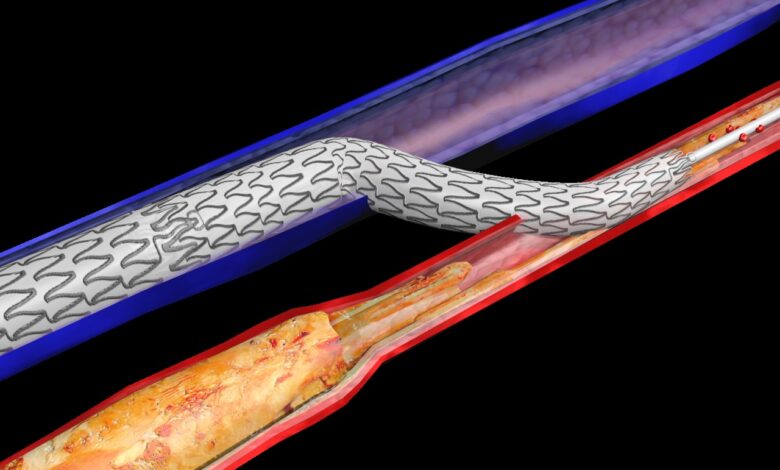
“Normally, arteries supply oxygen and life-sustaining nutrients in blood throughout the body, and veins return blood to the heart and lungs for regeneration,” explained Dr. Feyko. “In patients with CLTI, whose diseased or damaged artery cannot serve as the blood supply to the lower limb, LimFlow technology enables us to adapt a vein so it will serve as an artery.”
LimFlow, approved by the FDA in 2023, includes balloon catheters, endoscopic instruments, and covered stents that are inserted into veins to become blood channels. Physicians use ultrasound imaging technology for visual guidance during this delicate procedure.
“The LimFlow treatment can benefit select ‘no-option’ patients in whom all other medical and surgical options to correct arterial blockages have been exhausted,” said Dr. Feyko, who has performed this innovative procedure on 14 patients thus far.
Using the LimFlow system, Dr. Feyko rerouted blood flow around the patient’s completely blocked tibial leg artery in the calf. He then directed the blood flow through a tiny puncture from the artery into the adjacent tibial vein, which he had modified to serve as an artery, becoming the new blood supply to the patient’s foot.
Since undergoing the procedure, the patient has experienced reduced pain in his lower leg and foot, healing of chronically infected foot/leg wounds, and, most importantly, the avoidance of a total amputation of the once-in-jeopardy limb.
“This procedure, and subsequent tissue/limb survival, were possible only because we have access to the last-chance LimFlow treatment,” Dr. Feyko continued. He estimates that at least 20-30 patients per year will be able to undergo LimFlow at St. Luke’s, because their tibial artery and vein are adaptable to this new, limb-saving treatment. In addition to Dr. Feyko, St. Luke’s interventional radiologists will also perform this unique procedure.